


To speak of flamenco is to speak of voice, rhythm, dance, and, most especially, the guitar.
And within this sonic universe, the Granada guitar holds a privileged place due to its identity, its artisanal construction, and the legacy of its luthiers.
That’s why today we want to talk about the key instrument that gives flamenco its special touch.
The Granada School of Luthierie: A Centuries-Old Tradition
Guitar making in Granada is nothing new. Following the tradition of historical workshops, the Granada school of luthiers has its roots in the 19th century and is considered, along with the Madrid and Valencia guitar schools, one of the most important in Spain.
Throughout time, this school has maintained a very clear identity based on fidelity to traditional methods and a slow, constant evolution.
Contrary to other more industrialized trends, or those influenced by external fashions, instrument construction in Granada has opted for artisanal continuity.
This allowed the Granada guitar to maintain a distinctive identity recognized worldwide: a brilliant sound with great projection and a very balanced response for both solo playing and accompanying singing and dancing.
The Wood: The Heart of the Instrument
One of the most important elements in guitar construction is the wood. In the Granada school, this aspect is handled with particular rigor.
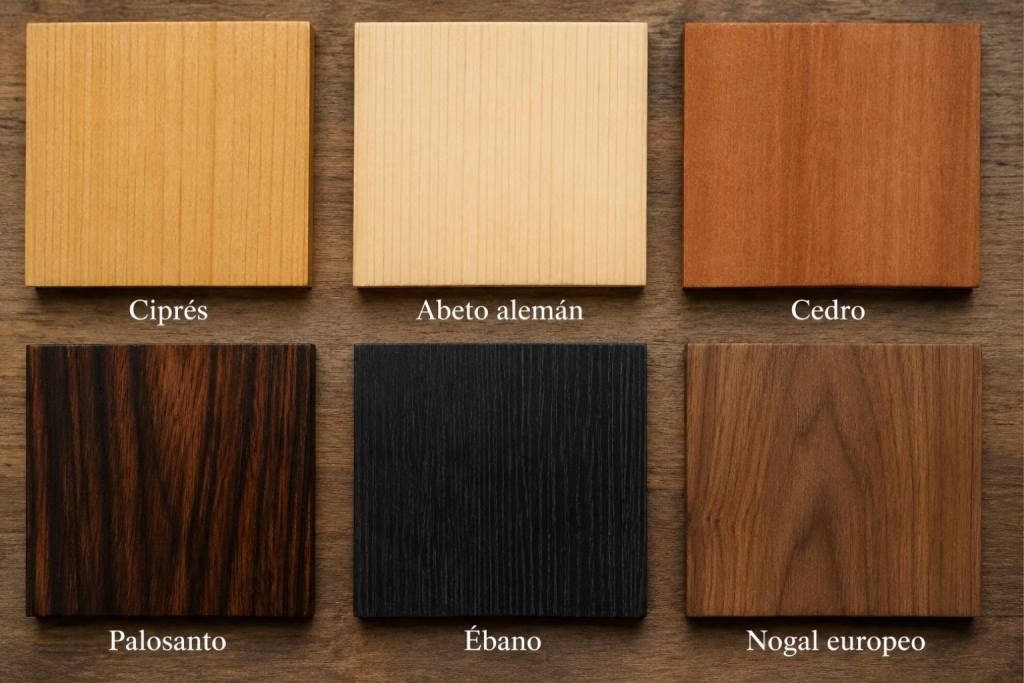
Luthiers work with selected woods such as:
- Cypress
- German Spruce
- Cedar
- Rosewood
- Ebony
- European Walnut
Each of them adds distinct nuances to the instrument’s final sound.
But it’s not just a matter of choosing good woods.
Drying and storage are key. Guitars must be built with naturally stabilized wood to prevent deformation in the future and ensure greater durability of the instrument.
This extreme care is one of the reasons why Granada guitars are so highly valued by professionals worldwide.
Artisanal Construction: The Value of Uniqueness
Luthierie in Granada is truly artisanal, and this is evident in every instrument.
Each guitar is a unique creation; there are no assembly lines, making every instrument one-of-a-kind.
The process includes:
- Manual wood selection
- Carving and assembly piece by piece
- Custom acoustic adjustments
- Finishing with traditional methods like French polishing
This type of finish not only has aesthetic value but also affects the instrument’s resonance, allowing the wood to vibrate better and the sound to develop over time.
The central idea is clear: identical guitars are not made, but rather instruments with their own personality.
Granada Luthiers: Guardians of the Flamenco Sound
Granada has been the birthplace of some of the most important luthiers of flamenco guitar.
Their work has been fundamental in defining the instrument’s sound as it is known today.
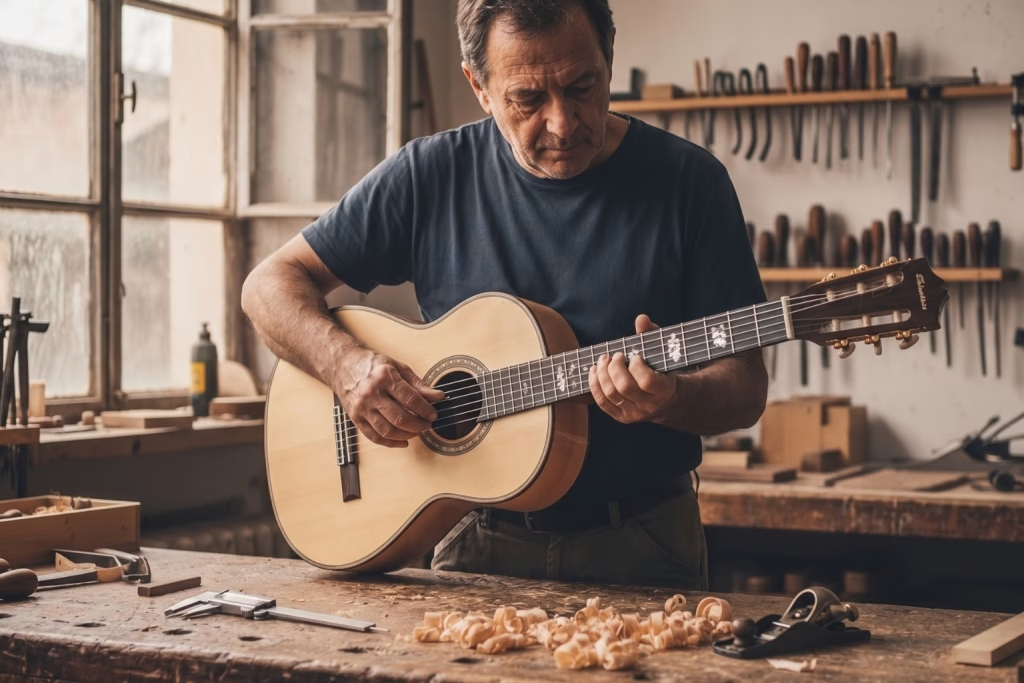
These artisans don’t just build guitars: they create tools of artistic expression.
Their influence extends to professional guitarists worldwide, who seek in the Granada guitar a balance between power, sensitivity, and dynamic response.
The tradition has been passed down from generation to generation, consolidating a craft that combines technique, experience, and a deep musical sensibility.
Characteristics of the Granada Guitar
The result of this entire artisanal process is an instrument with a unique sonic identity.
- Bright and clear sound in the trebles
- Deep and balanced bass
- Great projection in open spaces
- Quick response to the guitarist’s touch
- Versatility for accompaniment and solo
All these characteristics contribute to the Granada guitar being highly valued in the purest flamenco, as this instrument must maintain a continuous dialogue with the singing and dancing.
Granada: Cradle of Great Flamenco Luthiers
Over time, Granada has been the city where some of the most important flamenco guitar makers have settled.
Their workshops have shaped the sound of generations of artists.
Antonio Marín Montero
Considered one of the great masters of the modern flamenco guitar, his work has been an international benchmark. His instruments stand out for their balance between power and sonic sweetness.
Manuel de la Chica
A key figure in the evolution of the Granada guitar during the 20th century. His understanding of instrument construction marked a before and after in the flamenco sound.
Contemporary Families and Workshops
The tradition continues today with luthiers such as the Marín, Bellido families, or specialized workshops like those of Germán Pérez or Daniel Gil de Avalle, who keep the artisanal legacy alive, adapting it to the current needs of professional guitarists.
The Guitarrería Germán Pérez is an example of this continuity in craftsmanship, where manual elaboration is still the basis of the work.
Despite industrialization and mass production, Granada luthierie continues to rely on manual work. Each guitar can require weeks or even months to craft.
In workshops like those of the Granada school, the process includes:
- Selection and natural drying of wood
- Manual carving of each piece
- Artisanal assembly of the soundbox
- Final adjustments made by ear by the luthier himself
This level of detail makes each guitar a unique and unrepeatable piece.
Despite industrialization and mass production, Granada luthierie continues to rely on manual work. Each guitar can require weeks or even months to craft.
In workshops like those of the Granada school, the process includes:
- Selection and natural drying of wood
- Manual carving of each piece
- Artisanal assembly of the soundbox
- Final adjustments made by ear by the luthier himself
This level of detail makes each guitar a unique and unrepeatable piece.