


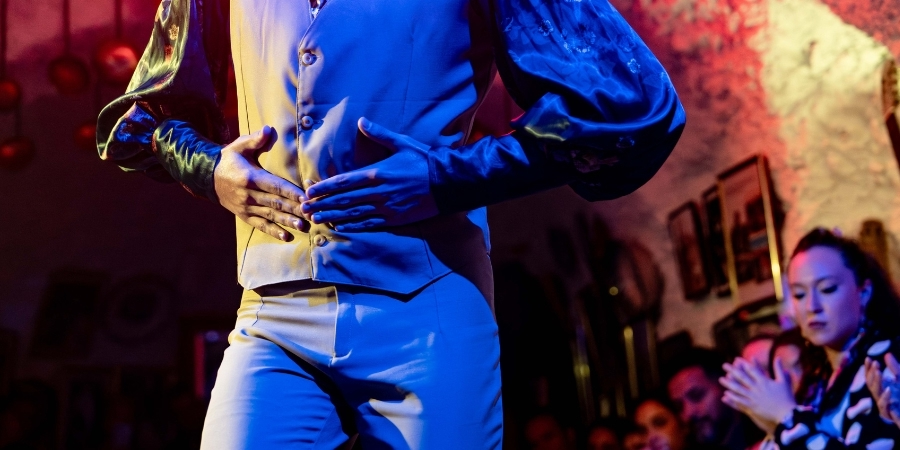
The word ‘flamenco’ commands great respect, as it is much more than just music and dance. It is an emotional language, a lifestyle, and a cultural expression that has remained alive for centuries, full of history, cultural blending, and deep feeling.
But many curious facts about flamenco remain unknown, despite it being a cultural symbol of Spain, especially in Andalusia. Today we will talk about many interesting facts about this art, which surprise even those who think they know it well.
We have compiled flamenco facts you might not have known, although there are many more. We will discuss its lesser-known origins, as well as details about the singing, dancing, guitar, and its global impact. A brief journey through this magical and captivating art form.
Flamenco is a Cultural Blend and Did Not Originate in a Single Place
Its origin is in Andalusia, but it cannot be said that it was born in one specific spot.
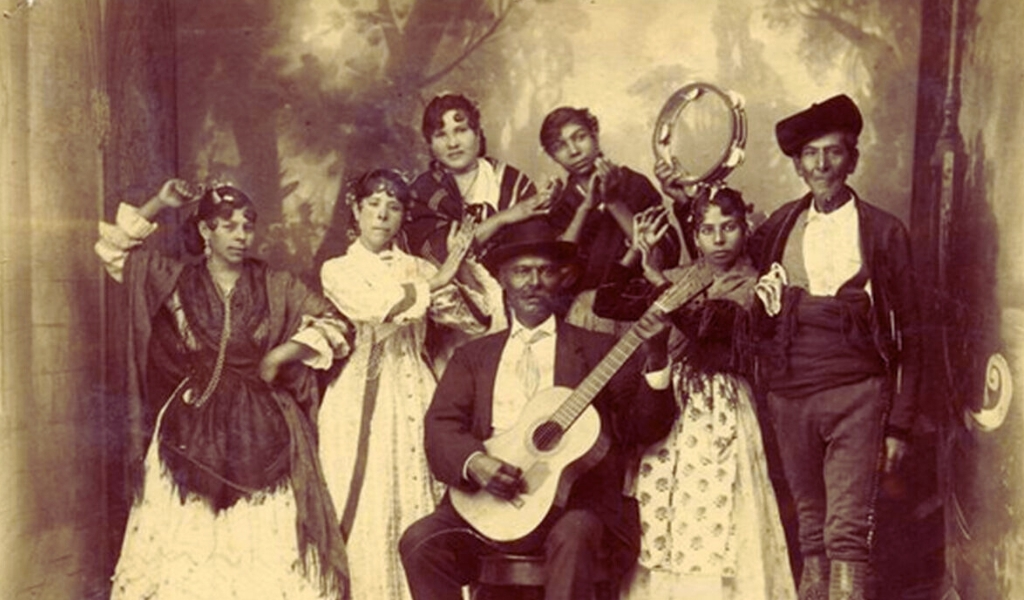
It emerged as a result of the coexistence of multiple cultures: Roma, Arabs, Jews, and Christians, especially in areas of western and eastern Andalusia. This coexistence gave rise to a unique artistic expression that evolved over centuries through oral and popular tradition.
Flamenco Was Once Considered a Marginal Art Form
For centuries, it was considered a lower-class art, associated with marginal and persecuted environments. The Roma people, the creators of this art, have been highly discriminated against, leading to its development in private, family, and closed settings, far from large stages.
The “Duende” Cannot Be Learned
The key to flamenco, the duende, is something innate to the person and cannot be learned. It cannot be defined by a technique or a style; it is rather a deep emotional state that arises unpredictably.
Federico García Lorca described it as a dark force that invades the artist and the audience. The duende is not rehearsed; it is either felt or not felt.
Singing is the Origin of Everything
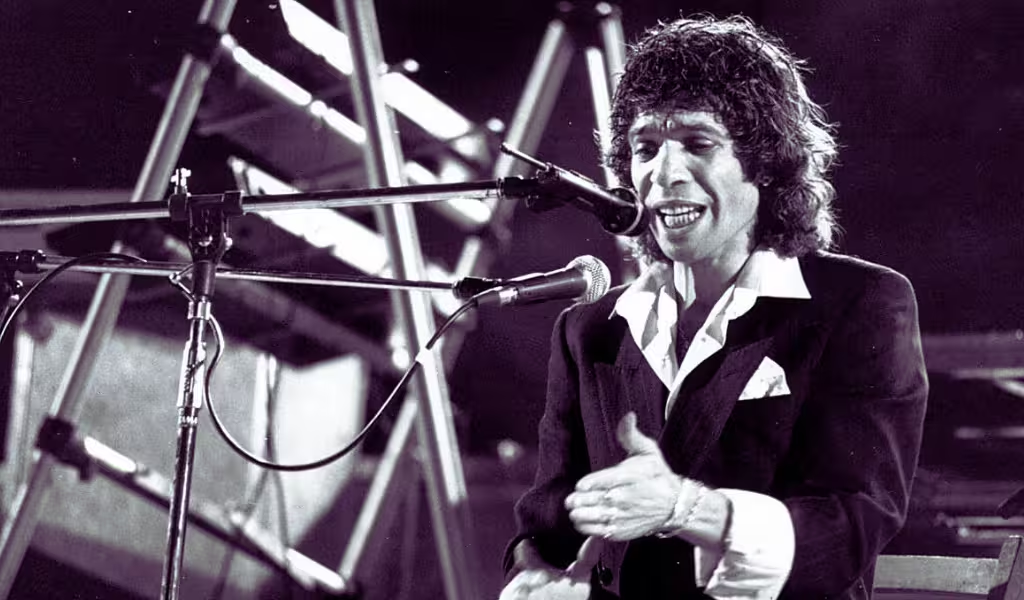
Although dancing often attracts the most attention, singing is the fundamental pillar of flamenco. Flamenco was sung even before dancing appeared as a performance. The guitar and dance later emerged to accompany the male or female singer.
There Are More Than 50 Flamenco Styles
There isn’t just one style of flamenco; there is an entire universe of this art with more than 50 different palos or styles. Each palo sounds different, has its own rhythm, structure, origin, and character. The most famous palos are the soleá, seguiriya, bulería, fandangos, and alegrías.
Some Flamenco Styles Originated from Work
One of the most curious facts about flamenco is that some of its styles were born in very specific work environments:
- Martinetes: blacksmiths’ songs
- Tonás: unaccompanied songs
- Trillas: field songs
Flamenco is also a memory of hard work and daily life.
Many Flamenco Styles Are Not Danced
Many flamenco styles are not danced; that is, some are composed only of the singing voice, such as certain tonás or martinetes, which are performed without guitar or dance.
Each Region Has Its Own Style
Another flamenco curiosity is that each region developed its own way of singing and playing:
- Cadiz: more cheerful and festive
- Jerez: more profound
- Granada: more melodic
- Seville: more stylized
Each territory has its own style, even within the same province.
Flamenco Was Transmitted Orally for Centuries
Flamenco was transmitted orally; it was not written down or taught in schools. New generations learned it by listening, observing, and repeating it within the family environment. This is one of the reasons why there are so many variations of the same palo depending on the region or flamenco family.
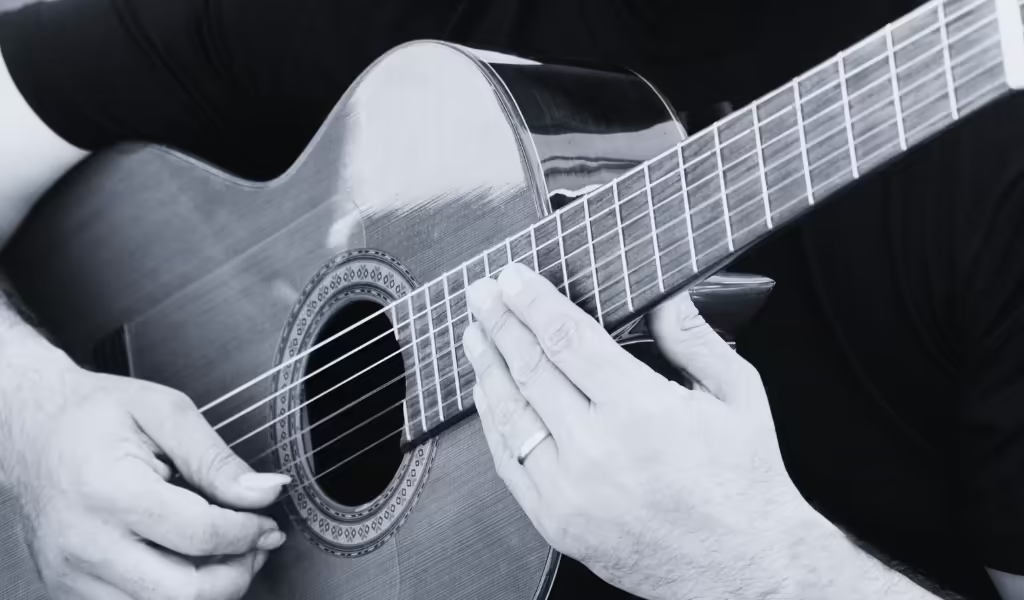
The Flamenco Guitar is Different from the Classical Guitar
Although they share some similarities, the flamenco guitar is different from the classical one. It is lighter, has a brighter and drier sound, and is designed to respond to the rhythm and compás of the singing and dancing.
The Compás is the Foundation of Everything
In this art, the compás is everything. It is not just a rhythm; it is an internal structure that guides the singer, guitarist, and dancer. Some compases, like the 12-beat one, are quite complex, and many years of experience are needed to master them.
Zapateado is Body Percussion
Another flamenco curiosity is that the zapateado is not just an aesthetic part of the dance. It functions as a percussion instrument, dialoguing with the guitar and the singing. Each beat has a specific rhythmic intention and is part of flamenco’s musical language.
Flamenco Had No Stage
In its beginnings, flamenco was performed in taverns, patios, courtyards, and private gatherings. It wasn’t until the late 19th century that the café cantantes emerged, professionalizing flamenco and bringing it to the general public.
Hand Clapping Also Has Technique
Hand clapping in flamenco is not improvised. There are many types of muffled claps and clear claps, and each is used according to the palo and the moment. A good palmero (clapper) is fundamental; in the performance, they are as important as any other artist.
Flamenco Was Scorned Before Being Admired
For many years, flamenco was scorned, considered an unrefined and vulgar art. It was not until the 20th century that it began to be valued as a high-level artistic expression, thanks to intellectuals, artists, and musicians who defended and studied it in depth.
Flamenco Influences Many Musical Styles
Flamenco has influenced styles as diverse as jazz, rock, pop, and classical music. Many artists, even internationally, have included flamenco elements in their compositions, demonstrating its capacity for adaptation and evolution.
Not All Flamenco Artists Are Roma (Nor Are All Roma Flamenco Artists)
Although the Roma people are an essential pillar in the creation of flamenco, not all flamenco artists are Roma, nor do all Roma dedicate themselves to flamenco. It is an open culture that has been enriched by people of different origins.
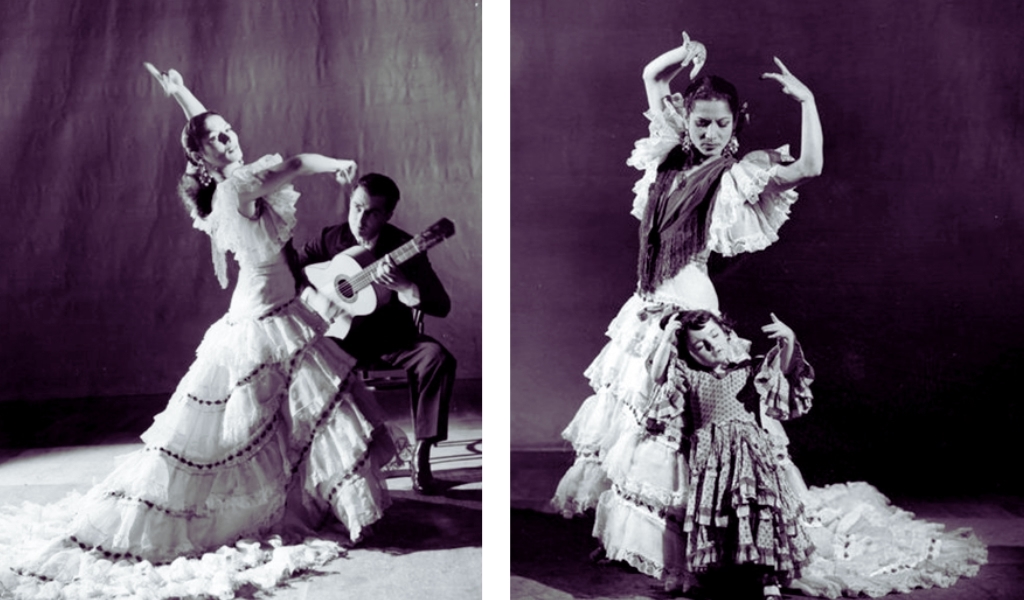
The Flamenco Dress Has a Recent History
Another flamenco curiosity is that the typical dress is not that old. It didn’t emerge until the late 19th century, evolving from the clothing worn by women at fairs and pilgrimages. Over the years, it transformed into a symbol of cultural identity and aesthetics.
Flamenco is a World Heritage
In 2010, UNESCO declared flamenco an Intangible Cultural Heritage of Humanity, recognizing its global value, history, and importance as a living art.
Flamenco is Studied in Universities
Currently, flamenco is not only experienced on stages and in peñas; it is also studied academically. There are university courses, conservatories, and research centers that focus solely on flamenco.
Flamenco Continues to Evolve
Far from being a static art, flamenco is constantly evolving. New generations experiment, fuse, and reinterpret flamenco without losing its essence, demonstrating that it is a living art, capable of adapting to every era.
Flamenco: An Art That Is Felt More Than Explained
Flamenco is not fully understood by reading or listening to explanations. It is understood when it is lived, when one hears a ‘quejío’ that shakes the soul or sees a dance that seems to stop time. It is an art born of pain, joy, and truth, and it has survived thanks to the passion of those who feel it as part of their identity.
These 20 flamenco facts demonstrate that we are dealing with a profound, complex, and nuanced cultural expression. An art that does not belong only to the past, but continues to beat strongly in the present and looks towards the future.