

Flamenco cannot be explained—it has to be felt. There are nights at the tablao when, halfway through a soleá, an unusual silence falls over the audience. It’s not that no one is talking; it’s that no one can speak. Something has happened on stage that cannot be described with technical terms or beautiful adjectives. That, precisely, is what the great masters of flamenco have spent the last century trying to put into words.
They haven’t quite succeeded (no one ever does), but along the way they have left behind phrases that have been etched in fire. Here are some of our favorites, and why we believe they remain true.
Their quotes have been engraved in the collective memory as much as their songs, and today they continue to resonate in every tablao, every peña, and every cave where the rhythm remains alive.
We have compiled some of the most iconic quotes spoken by flamenco legends, from singers and guitarists to poets who dedicated their lives to understanding this art. A journey through the words that define, better than any treatise, what flamenco means to those who live it from the inside.
Lorca and that thing that rises from the feet
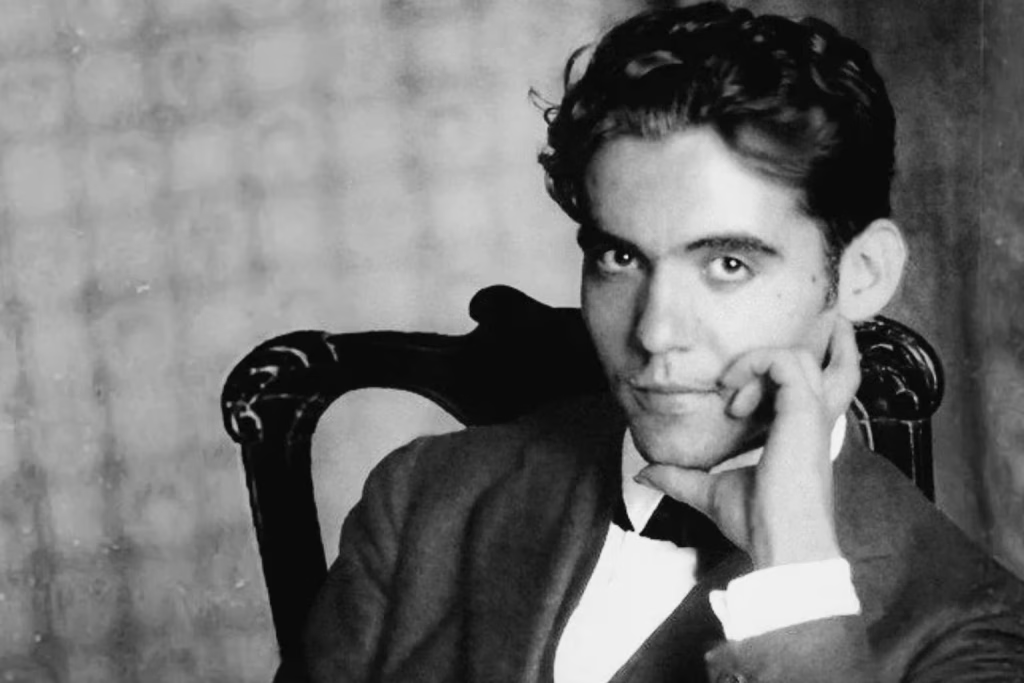
Federico García Lorca was neither a singer nor a dancer, but he may have been the one who best understood what happens on a flamenco stage. In his lecture on the duende, he said something as simple as this:
“The duende is not in the throat; it comes up from the soles of the feet.”
A very strange image if you think about it coldly, but one that anyone who has seen a dancer “enter” a dance understands without the need for explanation. There is something physical, almost earthly, in that moment when an artist stops performing and starts truly feeling.
Camarón and the eternal struggle between purity and freedom
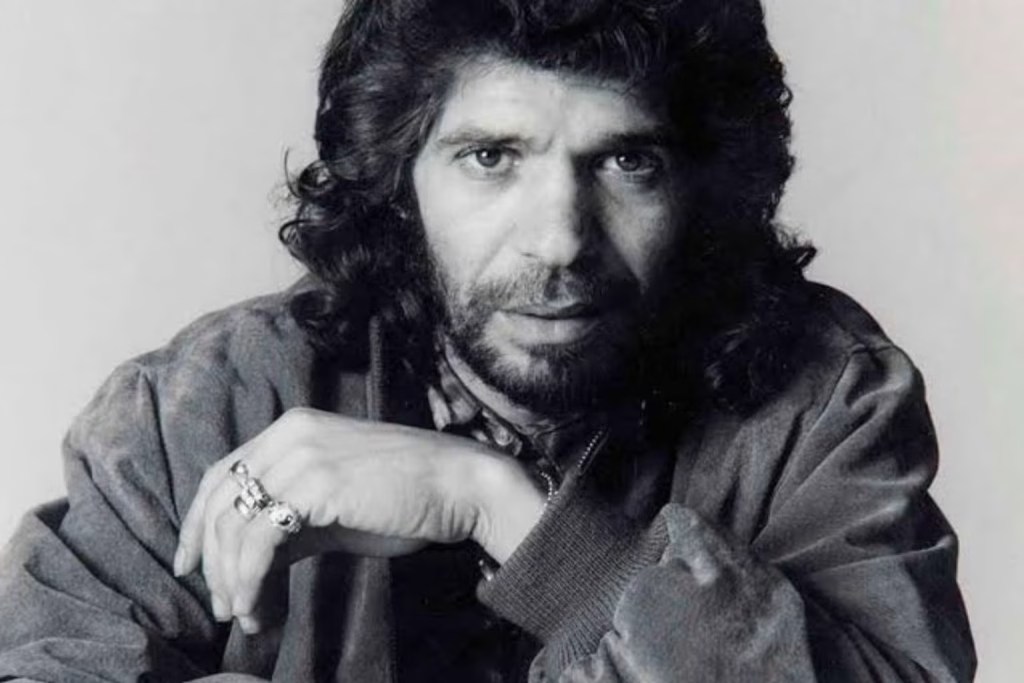
Camarón de la Isla liked to summarize flamenco with short, powerful phrases—the kind that don’t leave much room for argument. In an interview, he said:
“Flamenco has only one school: to transmit or not to transmit.”
It is an idea that settles the eternal fight between purists and modernists in one fell swoop. He also expressed in a phrase that while the structures of cante were firmly established by the elders, he understood that living art demands freedom.
“Flamenco is already made. You can’t make more flamenco than what has already been done. What you have to do is put your personality into it.”
Camarón never betrayed the roots of cante; he simply dared to sing it with his own voice, his rage, and his way of being in the world.
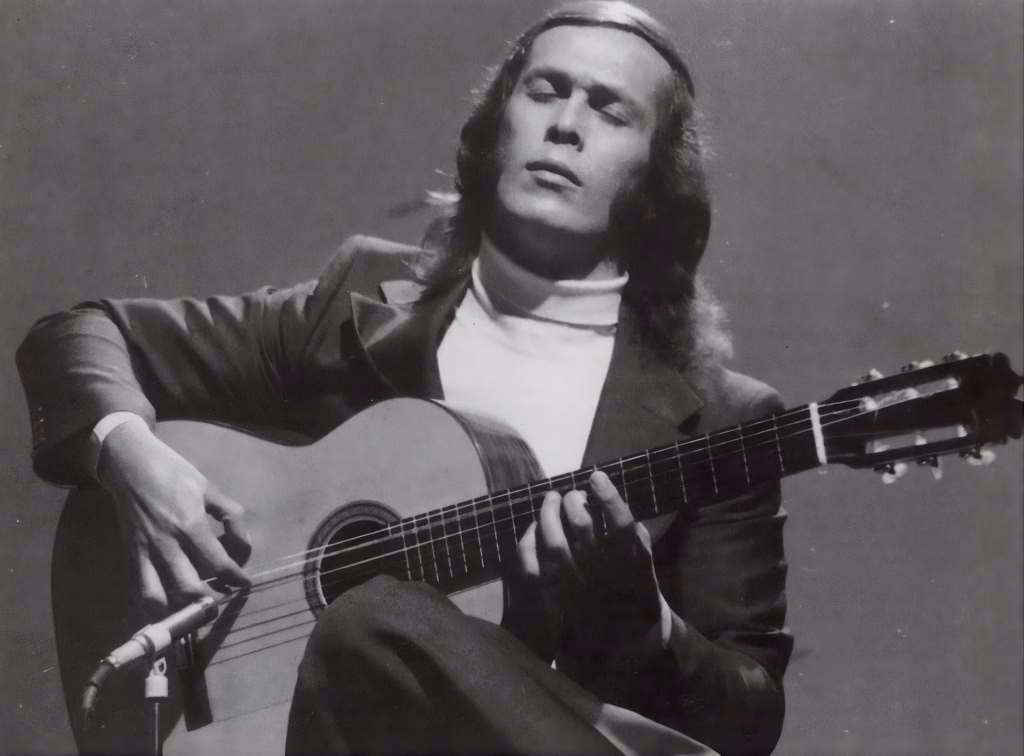
Paco de Lucía and a guitar that spoke without words
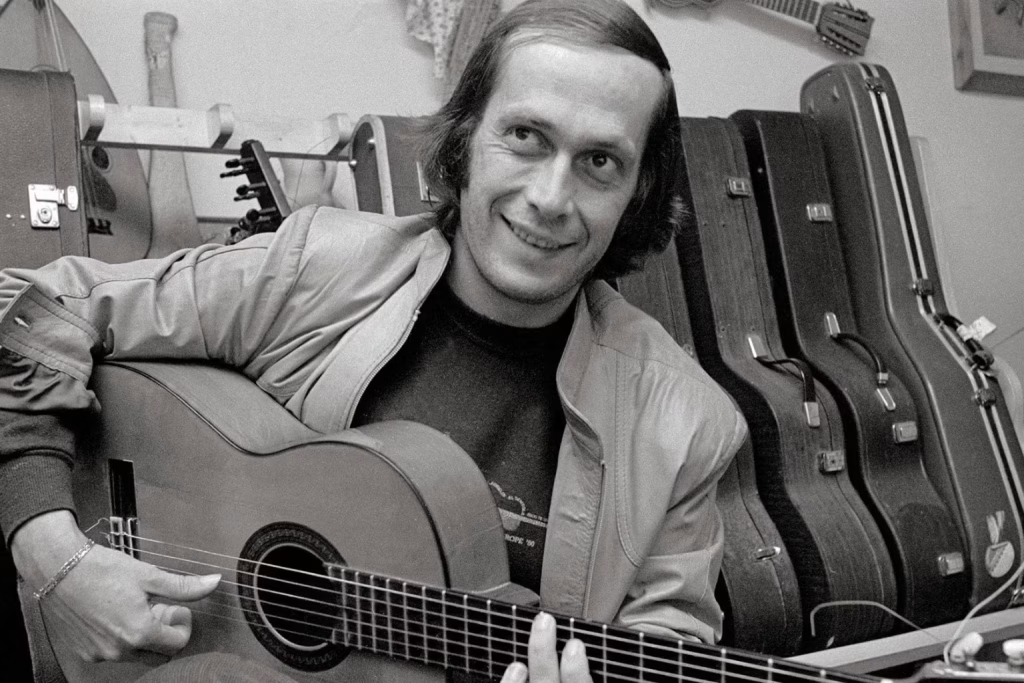
Paco de Lucía used to say that:
“The guitar has given me something that no language could give me: the ability to express myself to the rest of the world without using words.”
And he wasn’t exaggerating. Before him, the flamenco guitar was almost an accompaniment instrument; afterward, it became a protagonist in its own right, capable of filling theaters on its own. Listening to him play remains the best proof that flamenco needs no translation to move someone who has never set foot in Andalusia.
Enrique Morente and flamenco without borders
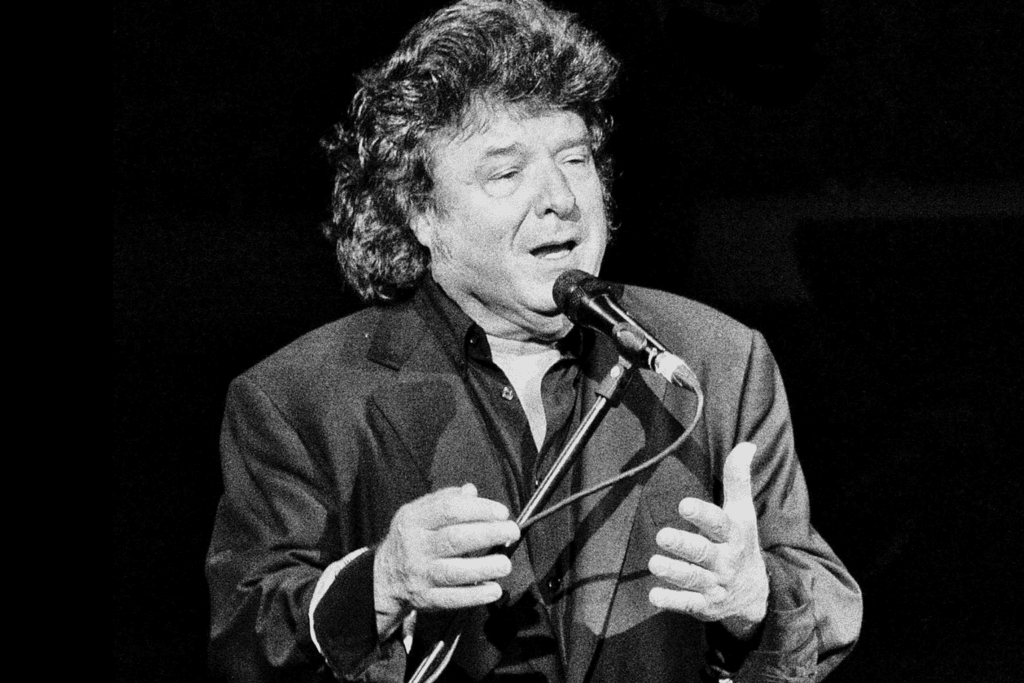
Morente, the great innovator of contemporary cante, fled from dogmas and closed minds. He went as far as to say that:
“Flamenco and jazz are two brother hearts.”
Another legendary quote from this artist was:
“If flamenco were an exact science, it would be incredibly boring.”
His way of understanding art reminds us that flamenco has never been a watertight compartment: it has been absorbing everything that crossed its path without losing an ounce of its identity.
Antonio Mairena: The Memory of a People
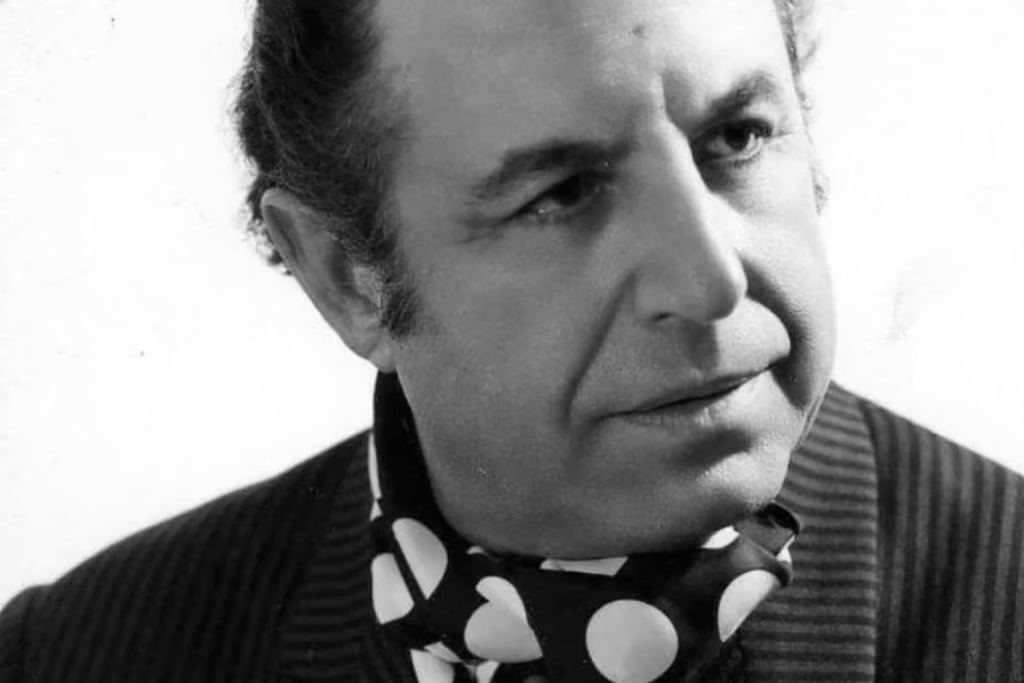
Antonio Mairena, one of the most academic figures and defenders of Gypsy-Andalusian cante, defined the natural order of flamenco emotion.
We highlight a profound phrase he used to say:
“Flamenco is the music of a people who sing their pain before singing their joy.”
With this phrase, the artist wanted to express that flamenco was not born in a salon; it was born on the margins. In persecution, in the exhaustion of entire generations who had to seek refuge in song. That is why even the alegrías or bulerías—the most festive styles—carry a sense of resistance within the rhythm, even if it’s sometimes barely noticeable. First, you must weep for the sorrow. Only after letting it out, after singing it until you are empty, can you truly celebrate.
Words only understood by those on the inside
Anyone who has spent time around flamenco knows there are words that don’t translate well. The pellizco, that physical punch to the stomach when a song hits the truth. The jondura, that dark depth sought by cante jondo. Or afilar la voz (sharpening the voice), the way a singer deliberately wears down their throat until they find the exact point of pain that the lyrics require.
These are not technicalities: they are this art form’s way of naming what happens inside.
We could focus only on the curious anecdotes, but the truth is that these phrases remain useful because they explain something that happens every night in a real tablao: that no one goes up on that stage to put on a show. They go up to tell something of their own. When a singer tears their shirt or a dancer strikes the floor with rage, they aren’t performing for anyone’s camera. They are baring themselves, literally and figuratively, in front of strangers.
As the Andalusian proverb goes, he who sings scares away his woes. Here, besides scaring them away, we turn them into the reason you keep coming back.