


From Cafés Cantantes to Zambra: The Journey That Changed Flamenco Forever
Have you ever thought about how flamenco went from being a pastime at intimate family gatherings to an art seen by millions of people on stages around the world?
Well, today we wanted to talk about cafés cantantes, as this type of performance is part of flamenco history.
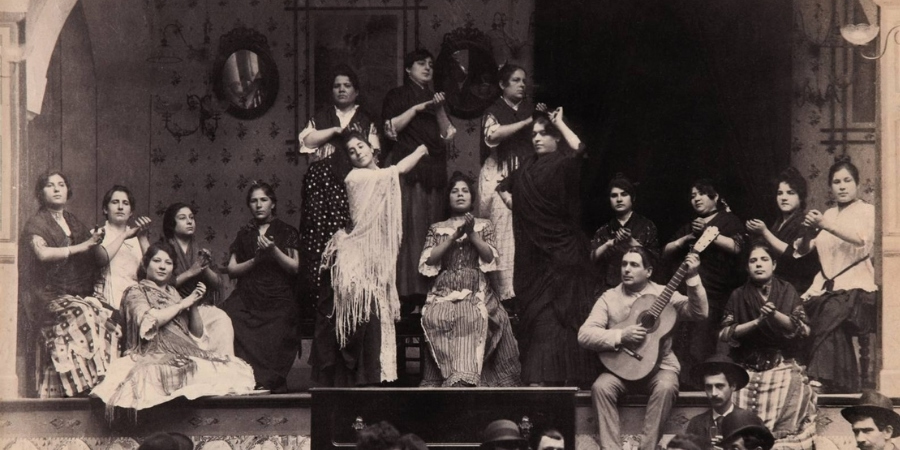
Before there were tablaos or flamenco caves as we know them today, flamenco was performed in cafés cantantes.
During this era, which we can span from the mid-19th century to the first decades of the 20th, flamenco emerged as a professional spectacle on a global level.
What Were Cafés Cantantes?
Cafés cantantes emerged between 1840 and 1920 and were establishments where drinks and food were served, but where you could also enjoy a professional live flamenco performance on a wooden stage.
We could say that in these places flamenco “came out of the closet” and began to professionalize. Flamenco artists no longer sang only for their family and friends; now they could dedicate themselves to it professionally, earn a salary, and create healthy competition that improved dance technique, singing complexity, and guitar mastery to levels never seen before.
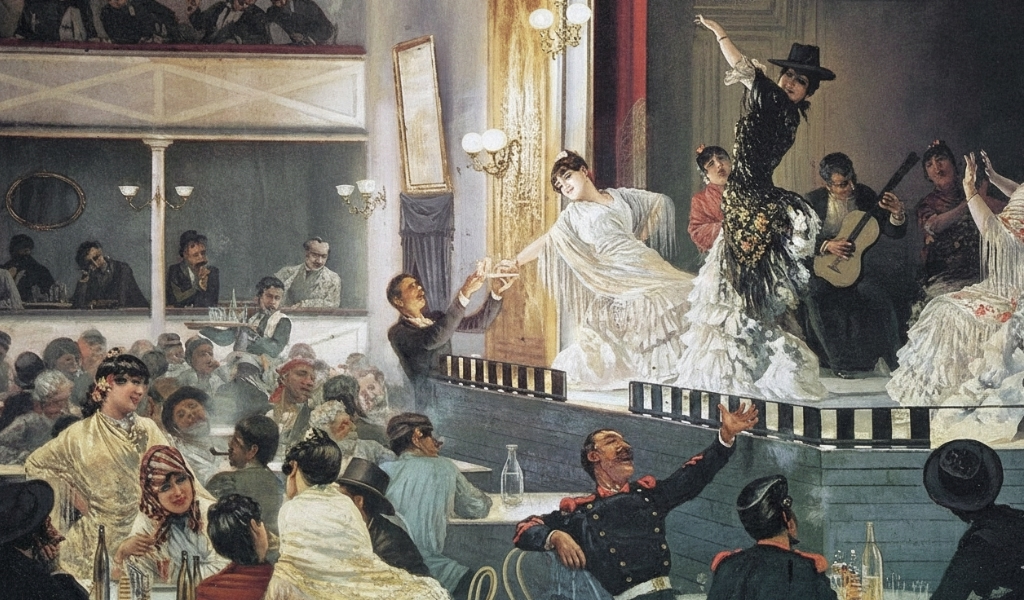
This fact forever transformed folklore into a complete artistic discipline with technique.
It was in these cafés cantantes that the “palos” or flamenco styles that exist today were established, allowing legendary voices and dancers with unique artistry to dedicate themselves to this art as a profession, becoming the genre’s first media stars.
Granada: The Key City in Flamenco History
Granada, along with Seville and Cádiz, were pioneers in the emergence of cafés cantantes. Granada’s cafés cantantes became very popular, as they were not just entertainment venues; they also transformed into centers of intellectual and artistic debate where figures who are now legends gathered.
In fact, there are very famous and mythical cafés cantantes such as Café de Chinitas and Café de la Marina, which were sources of inspiration for poets and painters.
In the city of Granada, both the caves of Sacromonte and the cafés cantantes were very famous places. While in the city center the cafés attracted travelers’ attention with their gas lights and urban folklore, on the slopes of Sacromonte the Zambra was a place that maintained its ancestral roots.
This zambra, which had a more improvised and familiar style, was what most attracted the gaze of romantic travelers and renowned artists like Federico García Lorca, who saw in the caves the purest representation of “duende.”
The Legacy That Lives in Cueva Los Amayas
Today, when you visit our cave, you are experiencing the direct evolution of those cafés cantantes adapted to the magical environment of Sacromonte. The heritage of these cafés is key to our performances and defines our experience:
- Extreme Closeness: That atmosphere where the spectator is not just an observer, but feels the air from the dancer’s dress, the artist’s sweat, and the vibration of the floor beneath their feet.
- The Professionalism of the Ensemble: We have a team of artists who, as in the old cafés cantantes, put their whole soul into each performance, mastering the most complex palos of flamenco.
- Traditional Gastronomy: Because, just as 150 years ago, art is best enjoyed with a drink or refreshment and the typical flavors of Granada, like our tapas and local dishes.
- Natural Acoustics: In cafés cantantes they sought the wooden stage; at Cueva Los Amayas, the cave’s own rock provides the performance with a natural resonance that envelops the spectator in pure, unfiltered sound.
Come Feel History Live
Although cafés cantantes have disappeared, they have evolved to become today’s flamenco tablaos, though the “duende” that inhabited them did not die.
When you visit us, you don’t just attend a performance; you participate in a centuries-old tradition that has survived time, maintaining respect for history but with the energy of the present.
At Cueva Los Amayas, you can take a journey through time into Granada’s unique history. You’ll understand why, so many years after the emergence of cafés cantantes, flamenco remains the most powerful expression of the human soul.
Are you ready to discover it?